
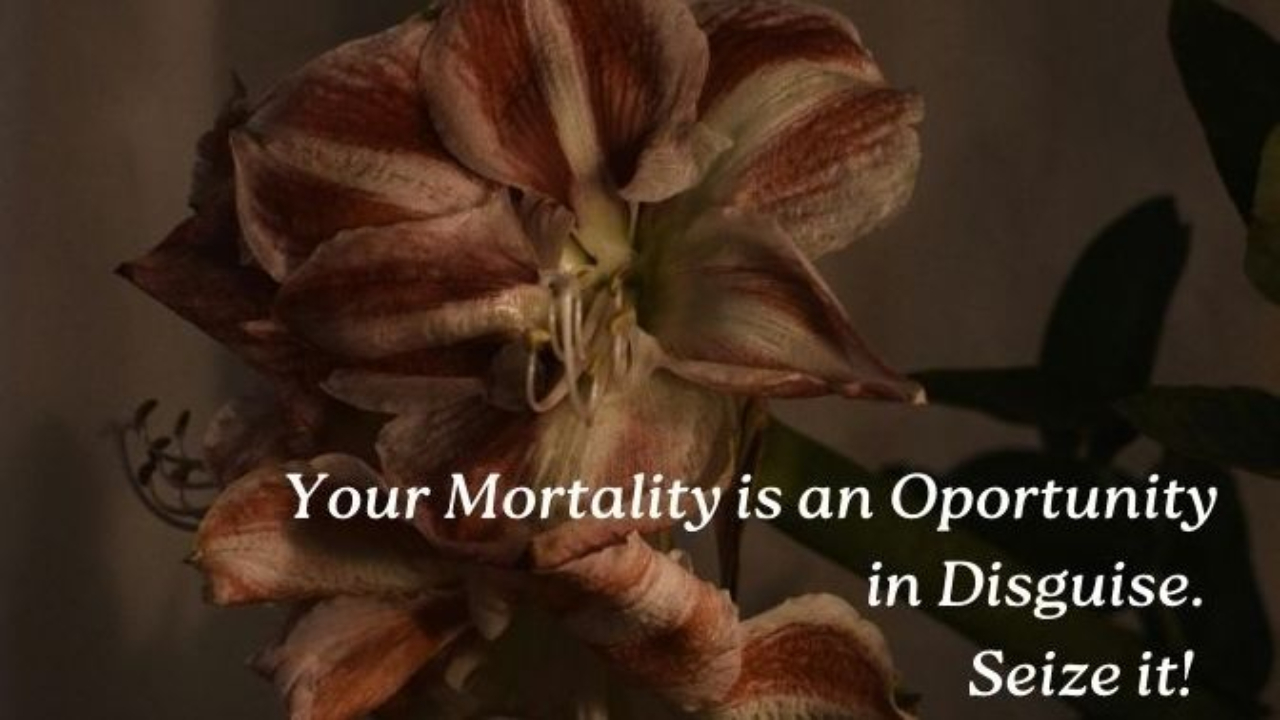
Your Mortality is (still) and Opportunity in Disguise
Jan 04, 2026Your Mortality Is (Still) an Opportunity in Disguise
As another new year begins, you may be looking ahead with plans, intentions, and hopes for what you want to improve or change. Goals are made. Habits are reviewed. Lists are written.
But there is another way to begin the year.
One that doesn’t start with goals, but with perspective.
From the very earliest days of Willow End-of-Life Education and Planning, we’ve said that your mortality is an opportunity in disguise. Not because it’s easy or comfortable to contemplate, but because remembering that life is finite has a way of clarifying what truly matters.
Why does thinking about mortality change how we live?
When we avoid the reality of our mortality altogether, something else happens. We become more reactive, more attached to what feels urgent but isn’t essential, and more likely to postpone what matters most.
This is something I’ve written about before, including through the lens of Terror Management Theory (TMT). TMT helps explain how unacknowledged awareness of death can quietly shape our behaviour, our relationships, and our choices. When mortality stays unexamined, it doesn’t disappear. It continues to operate indirectly in the background.
Avoidance doesn’t protect us from death awareness. It simply keeps it out of sight, where it can influence us without our noticing.
What happens when we meet mortality with attention?
When we meet our inevitable death with care and attention, something else becomes possible.
- Instead of avoidance, there can be intention.
- Instead of drifting, there can be focus.
- Instead of fear, there can be love.
Mortality, when acknowledged, becomes a lens rather than a threat. It helps us see more clearly what deserves our time, energy, and presence.
As you begin this year, here’s a question worth sitting with:
If this year mattered more than any other, what would you protect?
What would you stop postponing?
For many people, the answers point not to more productivity, but to presence. Not to doing more, but to living more deliberately.
For me, that looks like cherishing special relationships and nurturing new ones, focusing on what brings me joy (creativity, being in nature), and continuing my spiritual growth.
Too often, this kind of clarity only arrives very late in life. Willow exists to bring it forward.
What does it mean to create your legacy now?
This is where thinking about, and consciously creating, your legacy comes in.
Legacy is often misunderstood as something you leave behind later. In reality, it’s shaped every day through how you show up, what you prioritize, and how you relate to the people and responsibilities in your life.
Legacy isn’t only about what’s remembered.
It’s about how you’re living now.
Another question to consider:
If your way of being is your legacy, what are you practicing?
Are you practicing the legacy you want to leave behind, or unconsciously living out habits that no longer serve you?
You don’t need tidy answers to these questions. Simply letting them inform how you move through the coming weeks can be enough to shift something important.
Living with mortality in mind isn’t about death.
At its heart, this work is not about preparing for the end of life. It’s about living with intention, clarity, and meaning while you’re here.
When mortality is acknowledged rather than avoided:
-
Values become clearer.
-
Priorities come into focus.
-
Decisions feel more grounded.
-
Life feels more deliberate.
Your mortality isn’t a problem to solve.
It’s an invitation to live awake.


